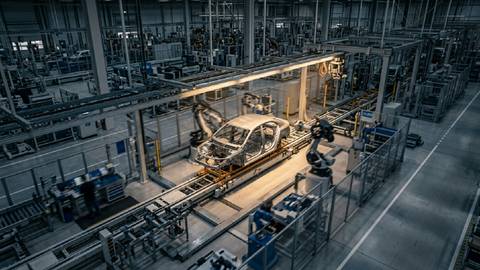
Jaguar Land Rover's announcement of a major voluntary redundancy programme is more than a headline; it's a powerful signal of the profound shifts reshaping the UK's automotive sector and a live case study in large-scale organisational change.
The company has confirmed it is seeking up to 4,000 voluntary redundancies from its salaried and management staff as part of a wider strategy to realise £1.7 billion in savings. This move comes as the manufacturer contends with a confluence of pressures, including weaker global sales, rising costs, and supply chain disruption. The goal, JLR states, is to create a simpler, more efficient organisation better equipped to navigate a volatile market.
This programme represents the company’s most significant restructuring exercise since 2019. It’s crucial to view this not in isolation, but alongside JLR’s simultaneous commitment to invest £18 billion in its future transformation, including new electric models and platforms. This dual narrative of contraction and investment creates a complex challenge for leaders: managing a difficult present while building commitment to a new future.
The Human Factor in a Financial Reset
On the surface, a voluntary scheme appears to be the 'softest' option for downsizing. However, practitioners know it introduces its own distinct set of challenges. The period of uncertainty can be corrosive, and critically, businesses have little control over who accepts the offer. Often, it’s the most mobile, marketable talent—those who feel most confident about their external prospects—who choose to leave, potentially draining the business of vital skills and institutional knowledge precisely when it needs them most.
Just as important is the experience of those who remain. The impact of 'survivor syndrome'—characterised by guilt, anxiety, and diminished morale—is a well-documented risk to productivity and engagement following a restructure. This is why effective employee support during redundancy must extend to the entire workforce. Without a clear plan to support and re-engage the remaining team, a business risks winning the financial battle but losing the cultural war. It's a stark reminder of the human cost of restructuring and its tangible impact on business performance.
A Test of Brand, Budget, and Foresight
For any leadership team observing the JLR story, the key lesson is that the execution of a restructure defines an employer brand for years to come. In an era of digital transparency, stories of how departing employees are treated travel instantly, influencing future talent acquisition, customer sentiment, and the loyalty of the remaining workforce. The decision is not whether to provide support, but how well you provide it. This is a moment that demands professional restructure support.
Organisations must look beyond the immediate P&L saving. When considering outplacement services for employers, the conversation often turns to budget. A common question is “how much does outplacement cost?” But the strategic question is: what is the cost of not doing it well? The expenses tied to lost productivity, reputational harm, and higher future recruitment costs almost always eclipse the investment required for high-quality career transition services.
A sensible leadership team should view outplacement not as a severance cost, but as a strategic investment in business continuity and brand equity.
A proactive response involves three key actions. First, budgeting for professional support as a non-negotiable component of any redundancy programme. Second, providing specific training and redundancy consultation support for the line managers tasked with delivering the news. Third, communicating an honest and compelling vision for the future to retain and remotivate the core team. Handling a large scale outplacement effectively is a true test of strategic foresight and corporate character.
Navigating the Transition with Purpose
Ultimately, protecting the business through intense change means protecting your people. The quality of support offered during this critical window is a direct and public reflection of an organisation's values. At [ImaginativeHR](/), we believe that well-executed outplacement after redundancy is fundamental to turning a moment of uncertainty into one of positive forward momentum for departing individuals.
Delivering meaningful redundancy support for employees goes far beyond basic CV workshops. It is about providing one-to-one expert coaching, live market intelligence, and the tools to build resilience, helping people navigate to their next role with confidence and purpose. Modern workforce transition services, delivered via integrated platforms like our Launchpad, ensure this support is personalised, accessible, and genuinely effective, safeguarding both individual careers and the employer’s long-term reputation.